


Page 160 - Risk Management for Outdoor Programs
P. 160
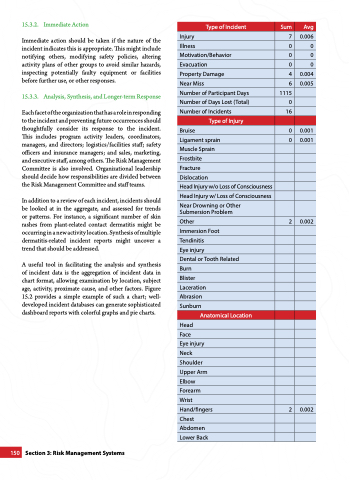
Type of Incident Sum Avg Injury 7 0.006 Illness 0 0 Motivation/Behavior 0 0 Evacuation 0 0 Property Damage 4 0.004 Near Miss 6 0.005 Number of Participant Days 1115 Number of Days Lost (Total) 0 Number of Incidents 16 Type of Injury Bruise 0 0.001 Ligament sprain 0 0.001 Muscle Sprain Frostbite Fracture Dislocation Head Injury w/o Loss of Consciousness Head Injury w/ Loss of Consciousness Near Drowning or Other Submersion Problem Other 2 0.002 Immersion Foot Tendinitis Eye injury Dental or Tooth Related Burn Blister Laceration Abrasion Sunburn Anatomical Location Head Face Eye injury Neck Shoulder Upper Arm Elbow Forearm Wrist Hand/fingers 2 0.002 Chest Abdomen Lower Back 150 15.3.2. Immediate Action Immediate action should be taken if the nature of the incident indicates this is appropriate. This might include notifying others, modifying safety policies, altering activity plans of other groups to avoid similar hazards, inspecting potentially faulty equipment or facilities before further use, or other responses. 15.3.3. Analysis, Synthesis, and Longer-term Response Each facet of the organization that has a role in responding to the incident and preventing future occurrences should thoughtfully consider its response to the incident. This includes program activity leaders, coordinators, managers, and directors; logistics/facilities staff; safety officers and insurance managers; and sales, marketing, and executive staff, among others. The Risk Management Committee is also involved. Organizational leadership should decide how responsibilities are divided between the Risk Management Committee and staff teams. In addition to a review of each incident, incidents should be looked at in the aggregate, and assessed for trends or patterns. For instance, a significant number of skin rashes from plant-related contact dermatitis might be occurring in a new activity location. Synthesis of multiple dermatitis-related incident reports might uncover a trend that should be addressed. A useful tool in facilitating the analysis and synthesis of incident data is the aggregation of incident data in chart format, allowing examination by location, subject age, activity, proximate cause, and other factors. Figure 15.2 provides a simple example of such a chart; well- developed incident databases can generate sophisticated dashboard reports with colorful graphs and pie charts. Section 3: Risk Management Systems


