


Page 180 - Risk Management for Outdoor Programs
P. 180
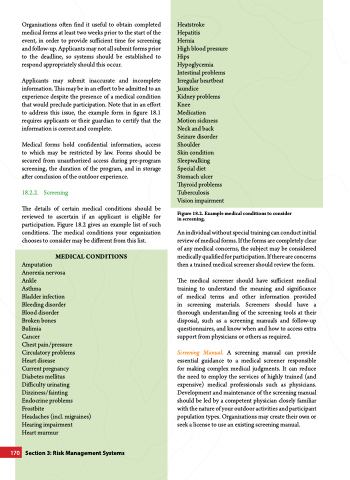
Organizations often find it useful to obtain completed medical forms at least two weeks prior to the start of the event, in order to provide sufficient time for screening and follow-up. Applicants may not all submit forms prior to the deadline, so systems should be established to respond appropriately should this occur. Applicants may submit inaccurate and incomplete information. This may be in an effort to be admitted to an experience despite the presence of a medical condition that would preclude participation. Note that in an effort to address this issue, the example form in figure 18.1 requires applicants or their guardian to certify that the information is correct and complete. Medical forms hold confidential information, access to which may be restricted by law. Forms should be secured from unauthorized access during pre-program screening, the duration of the program, and in storage after conclusion of the outdoor experience. 18.2.2. Screening The details of certain medical conditions should be reviewed to ascertain if an applicant is eligible for participation. Figure 18.2 gives an example list of such conditions. The medical conditions your organization chooses to consider may be different from this list. Figure 18.2. Example medical conditions to consider in screening. An individual without special training can conduct initial review of medical forms. If the forms are completely clear of any medical concerns, the subject may be considered medically qualified for participation. If there are concerns then a trained medical screener should review the form. The medical screener should have sufficient medical training to understand the meaning and significance of medical terms and other information provided in screening materials. Screeners should have a thorough understanding of the screening tools at their disposal, such as a screening manuals and follow-up questionnaires, and know when and how to access extra support from physicians or others as required. Screening Manual. A screening manual can provide essential guidance to a medical screener responsible for making complex medical judgments. It can reduce the need to employ the services of highly trained (and expensive) medical professionals such as physicians. Development and maintenance of the screening manual should be led by a competent physician closely familiar with the nature of your outdoor activities and participant population types. Organizations may create their own or seek a license to use an existing screening manual. Heatstroke Hepatitis Hernia High blood pressure Hips Hypoglycemia Intestinal problems Irregular heartbeat Jaundice Kidney problems Knee Medication Motion sickness Neck and back Seizure disorder Shoulder Skin condition Sleepwalking Special diet Stomach ulcer Thyroid problems Tuberculosis Vision impairment MEDICAL CONDITIONS Amputation Anorexia nervosa Ankle Asthma Bladder infection Bleeding disorder Blood disorder Broken bones Bulimia Cancer Chest pain/pressure Circulatory problems Heart disease Current pregnancy Diabetes mellitus Difficulty urinating Dizziness/fainting Endocrine problems Frostbite Headaches (incl. migraines) Hearing impairment Heart murmur Section 3: Risk Management Systems 170


