


Page 131 - Risk Management for Outdoor Programs
P. 131
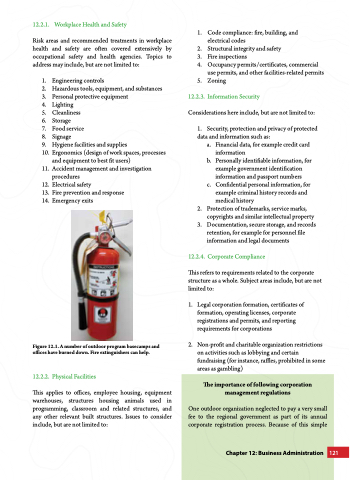
12.2.1. Workplace Health and Safety Risk areas and recommended treatments in workplace health and safety are often covered extensively by occupational safety and health agencies. Topics to address may include, but are not limited to: 1. Engineering controls 2. Hazardous tools, equipment, and substances 3. Personal protective equipment 4. Lighting 5. Cleanliness 6. Storage 7. Food service 8. Signage 9. Hygiene facilities and supplies 10. Ergonomics (design of work spaces, processes and equipment to best fit users) 11. Accident management and investigation procedures 12. Electrical safety 13. Fire prevention and response 14. Emergency exits Figure 12.1. A number of outdoor program basecamps and offices have burned down. Fire extinguishers can help. 12.2.2. Physical Facilities This applies to offices, employee housing, equipment warehouses, structures housing animals used in programming, classroom and related structures, and any other relevant built structures. Issues to consider include, but are not limited to: 1. Code compliance: fire, building, and electrical codes 2. Structural integrity and safety 3. Fire inspections 4. Occupancy permits/certificates, commercial use permits, and other facilities-related permits 5. Zoning 12.2.3. Information Security Considerations here include, but are not limited to: 1. Security, protection and privacy of protected data and information such as: a. Financial data, for example credit card information b. Personally identifiable information, for example government identification information and passport numbers c. Confidential personal information, for example criminal history records and medical history 2. Protection of trademarks, service marks, copyrights and similar intellectual property 3. Documentation, secure storage, and records retention, for example for personnel file information and legal documents 12.2.4. Corporate Compliance This refers to requirements related to the corporate structure as a whole. Subject areas include, but are not limited to: 1. Legal corporation formation, certificates of formation, operating licenses, corporate registrations and permits, and reporting requirements for corporations 2. Non-profit and charitable organization restrictions on activities such as lobbying and certain fundraising (for instance, raffles, prohibited in some areas as gambling) The importance of following corporation management regulations One outdoor organization neglected to pay a very small fee to the regional government as part of its annual corporate registration process. Because of this simple Chapter 12: Business Administration 121


